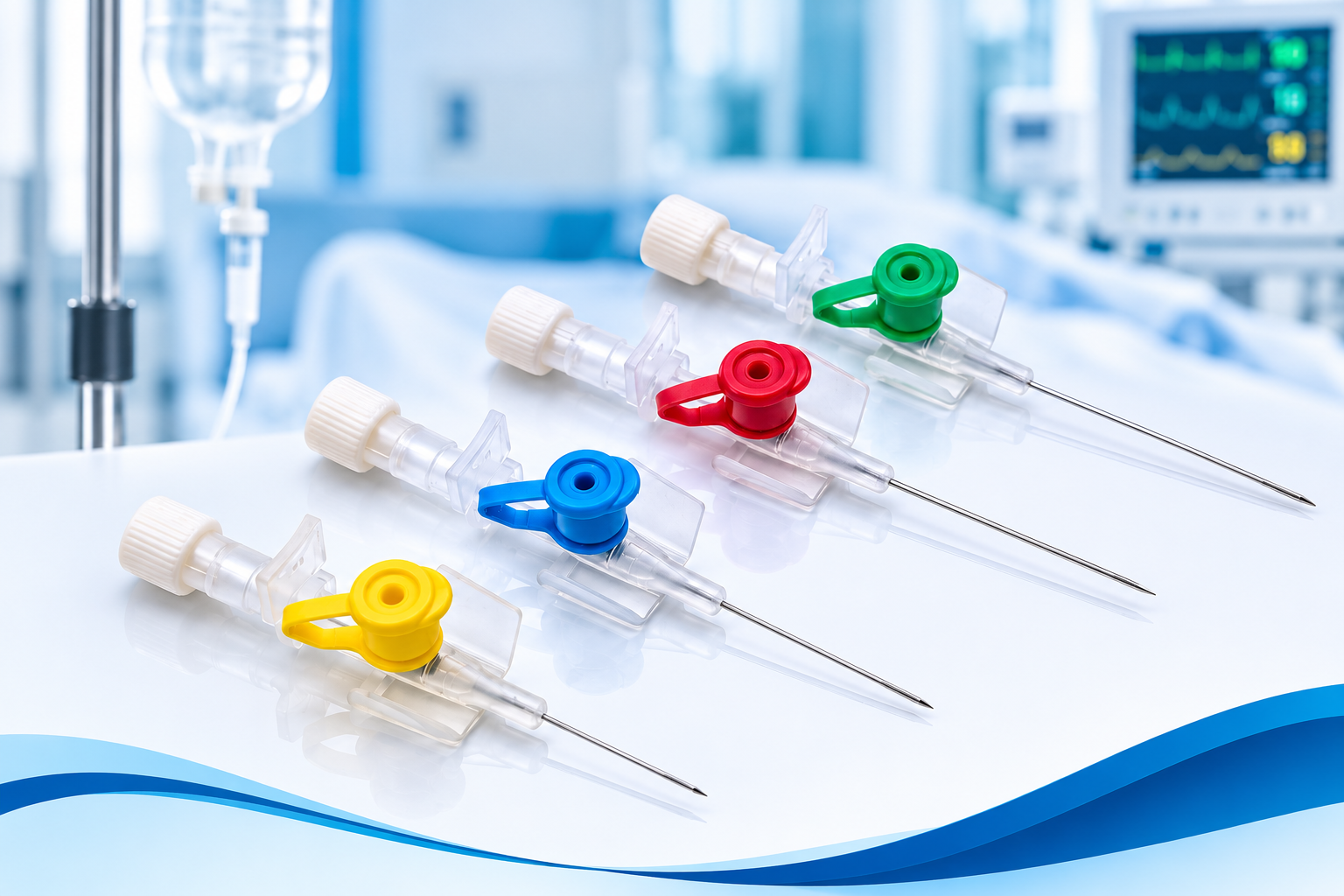
IV Cannula Dwell Time: Why Reliable Vascular Access Goes Beyond Successful Insertion
Establishing peripheral intravenous access is one of the most routine procedures in modern healthcare. From administering medications and fluids to supporting emergency treatment, a peripheral IV cannula provides an essential connection between the patient and prescribed therapy. However, successful insertion is only the beginning. Once a cannula is placed, its ability to continue supporting therapy reliably becomes equally important. This brings attention to an often-overlooked aspect of vascular access: IV cannula dwell time and ongoing catheter performance. A cannula that performs reliably throughout the required treatment period can help reduce unnecessary replacements, repeated venipuncture, interruptions to therapy, and additional workload for healthcare professionals.
Understanding IV Cannula Dwell Time
IV cannula dwell time refers to the period for which a peripheral intravenous catheter remains in place and is clinically usable. The appropriate duration is not simply determined by a fixed number of hours or days. Clinical practice increasingly considers factors such as the condition of the insertion site, the type of therapy being delivered, institutional protocols, patient characteristics, and signs of complications.
The important question is therefore not only: “Was vascular access successfully established?” It is also: “Can that access continue to perform appropriately for the duration of the required therapy?” This distinction changes how clinicians think about peripheral IV performance.
Why Cannulas May Require Replacement
Peripheral IV access can become compromised for several reasons. These may include:
- Phlebitis or irritation around the vein
- Infiltration or extravasation
- Occlusion
- Catheter dislodgement
- Leakage
- Infection concerns
- Loss of catheter functionality
When an IV cannula can no longer be safely or effectively used, clinicians may need to establish another access site. For patients, particularly those with difficult vascular access, fragile veins, chronic illness, or repeated hospital admissions, multiple insertion attempts can increase discomfort and anxiety. For healthcare teams, repeated cannulation can also consume valuable clinical time.
Device Stability Matters After Insertion
Cannula performance does not end at the needle tip. Once the introducer needle is removed, the flexible catheter must remain positioned within the vein while the patient moves, receives treatment, changes position, or undergoes routine care. A catheter that is excessively rigid may place unnecessary mechanical stress on the vessel. At the same time, a catheter must maintain sufficient structural integrity to resist kinking or deformation. This makes the balance between flexibility, strength, and dimensional stability an important element of vascular access device engineering. Reliable catheter performance supports the continuity of therapy rather than focusing solely on the insertion event.
Patient Movement Is a Real-World Design Consideration
Hospital care is dynamic. Patients turn in bed, walk, receive physiotherapy, undergo diagnostic procedures, and move between clinical departments. IV devices must function within this real-world environment. The location of the cannula can also influence how frequently the catheter experiences movement. For example, access placed near a joint may be exposed to greater mechanical stress than a site with less movement. This is why appropriate site selection, secure stabilization, and thoughtful device design work together. A successful vascular access strategy therefore combines the right catheter with the right placement, fixation, monitoring, and clinical practice.
Preserving Veins Through Better Vascular Access Decisions
Vein preservation is becoming increasingly important in modern patient care. Every unnecessary cannulation can reduce the number of easily accessible veins available for future treatment. This becomes particularly relevant for patients requiring repeated or prolonged therapies. Healthcare professionals must therefore consider the broader vascular access journey rather than treating every cannulation as an isolated procedure. Selecting an appropriate IV cannula, monitoring the insertion site, maintaining the device correctly, and removing or replacing access when clinically indicated can all contribute to better vein preservation.
Reliable Access Supports Clinical Workflow
Maintaining functional vascular access has operational benefits as well. When an IV cannula performs consistently, nurses and clinicians can focus on delivering therapy rather than troubleshooting access-related problems. Reliable access may help reduce:
- Treatment interruptions
- Repeated insertion procedures
- Additional consumable use
- Delays in medication administration
- Unnecessary demands on nursing time
This illustrates why seemingly small medical consumables can influence the efficiency of an entire care pathway.
Engineering IV Cannulas for the Complete Therapy Journey
Modern IV cannula development increasingly considers what happens both during and after insertion. Characteristics such as catheter material, surface characteristics, flexibility, structural stability, hub design, and compatibility with clinical workflows all contribute to overall device performance. Within Medivation Bio’s vascular access portfolio, IV cannula development reflects this broader understanding of everyday clinical requirements. The objective is not simply to create access to the bloodstream, but to support dependable vascular access throughout the period in which therapy is required.
Conclusion
Successful IV therapy should not be measured by insertion alone. The true value of peripheral vascular access lies in its ability to support treatment safely, consistently, and efficiently throughout the patient’s therapy. By considering dwell performance, catheter stability, vein preservation, patient movement, and ongoing site assessment, healthcare professionals can take a more complete approach to vascular access. As healthcare moves toward more patient-centered and resource-conscious care, the focus is shifting from simply placing an IV cannula to maintaining reliable vascular access for the complete therapy journey.
