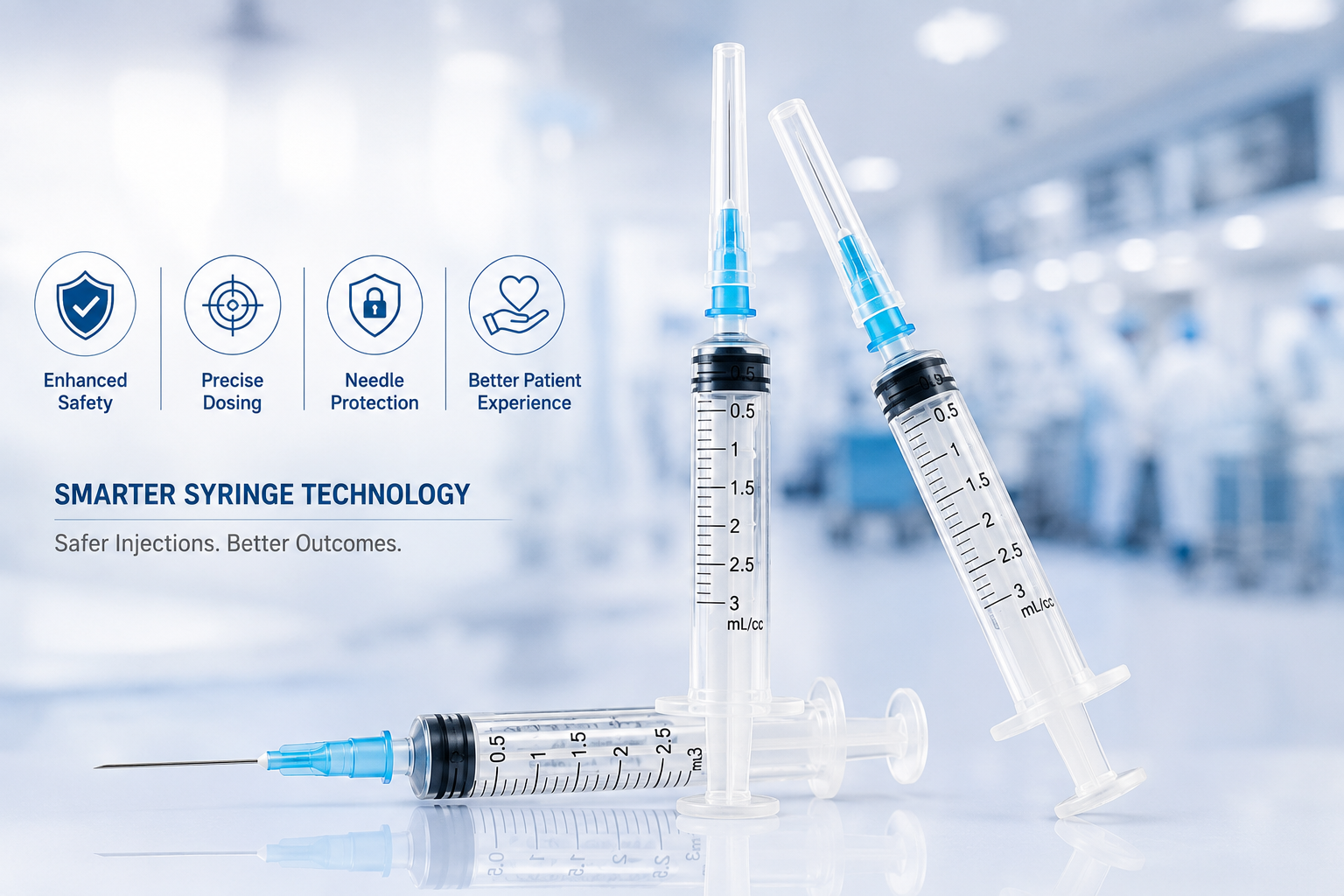
The Future of Injection Safety: Smarter Syringe Technologies
Injection procedures are among the most commonly performed medical interventions worldwide. From vaccinations and insulin delivery to emergency medications and intravenous therapies, syringes remain essential to healthcare delivery across every clinical setting. Yet despite their routine use, unsafe injection practices continue to pose significant risks to both patients and healthcare professionals.
Needle-stick injuries, medication errors, contamination, and improper disposal remain ongoing concerns within healthcare systems globally. As the demand for safer and more efficient care increases, the future of injection systems is being shaped by a new generation of smarter syringe technologies designed to enhance safety, improve precision, and support better clinical outcomes. Today, syringes are evolving beyond simple drug delivery tools into highly engineered safety devices built for the realities of modern healthcare.
Why Injection Safety Matters More Than Ever
Millions of injections are administered every day, making even small safety gaps clinically significant. Unsafe injection practices can lead to:
- Needle-stick injuries among healthcare workers
- Transmission of bloodborne infections
- Medication dosing inaccuracies
- Increased healthcare waste and costs
- Reduced patient confidence in care procedures
Healthcare systems are increasingly recognizing that improving injection safety requires more than training alone. Device innovation has become a critical part of reducing risk and supporting safer clinical workflows. This shift has accelerated the development of advanced injection safety devices that integrate protection mechanisms directly into syringe design.
Smart Syringe Technology
Smart syringe technology refers to syringes engineered with features that improve safety, accuracy, and usability. These innovations are designed to minimize human error while supporting efficient clinical practice. Unlike conventional syringes, modern safety syringes often include:
- Automatic needle retraction systems
- Needle shielding mechanisms
- Single-use locking features
- Precision-controlled dosing systems
These technologies help prevent accidental reuse and reduce exposure risks after injection procedures are completed. As healthcare moves toward more standardized safety practices, smart injection systems are becoming increasingly important across hospitals, clinics, and public health programs.
Preventing Needle-Stick Injuries Through Design
Needle-stick injuries remain one of the most common occupational hazards in healthcare environments. These incidents expose clinicians to serious infections and create psychological stress, reporting burdens, and treatment costs. Safety-engineered syringes are helping address this challenge through integrated protective mechanisms. Common safety features include:
- Retractable Needles: Automatically withdraw after use to minimize exposure risk
- Protective Needle Shields: Cover the needle immediately after injection
- Passive Safety Systems: Activate automatically without requiring additional user steps
These features significantly reduce accidental contact and improve compliance with safe disposal protocols. Manufacturers such as Medivation Bio focus on developing injection systems that prioritize both patient and clinician safety through precision-engineered protective designs.
Improving Accuracy in Drug Delivery
Modern syringe technologies are also enhancing medication accuracy, a critical factor in patient safety. Precise dosing is particularly important in:
- Pediatrics
- Critical care
- Vaccination programs
- High-risk medication administration
Advanced syringe designs now incorporate:
- Clear and precise graduation markings
- Smooth plunger movement for controlled injection
- Low dead space technology to reduce medication wastage
These improvements support more consistent drug delivery while reducing the risk of dosing errors.
Enhancing Patient Comfort and Experience
Patient experience is becoming an increasingly important aspect of healthcare quality. Painful or stressful injections can contribute to anxiety, treatment avoidance, and reduced patient cooperation. Smarter syringe technologies are helping improve comfort through:
- Fine-gauge needle integration
- Ultra-sharp needle tips for smoother penetration
- Reduced injection resistance during administration
These design improvements help minimize tissue trauma and create a more comfortable injection experience for patients of all ages.
Supporting Safer Public Health Programs
Large-scale vaccination drives and public health initiatives rely heavily on injection safety. In high-volume settings, devices must support rapid administration without compromising protection or consistency. Single-use smart syringes help:
- Prevent accidental reuse
- Maintain sterility standards
- Reduce cross-contamination risks
As global healthcare systems continue prioritizing infection control and immunization safety, advanced syringe technologies are expected to become standard practice in many regions.
The Role of Materials and Manufacturing Innovation
The future of smart syringes is also being shaped by advancements in material science and manufacturing precision. High-quality polymers, precision molding, and automated assembly processes contribute to:
- Better structural reliability
- Consistent plunger performance
- Enhanced sterility assurance
- Reduced mechanical failure risks
Rigorous quality control ensures that each syringe performs consistently under clinical conditions. These manufacturing standards are essential for maintaining trust in devices that are used millions of times every day.
Emerging Trends in Injection Systems
The future of injection safety is likely to include even more sophisticated innovations aimed at improving workflow efficiency and patient outcomes. Emerging trends include:
- Ergonomic syringe designs for improved clinician handling
- Enhanced tamper-evident packaging systems
- Integrated safety activation indicators
- More sustainable and material-efficient manufacturing approaches
As healthcare becomes more patient-centric and safety-focused, syringe technologies will continue evolving to meet increasingly complex clinical demands.
Building Safer Healthcare Through Smarter Devices
Injection safety is no longer viewed as a secondary consideration, it is now a central component of quality healthcare delivery. Smarter syringe technologies are helping healthcare providers reduce risks, improve efficiency, and strengthen patient confidence in clinical care.
By combining precision engineering, safety-focused design, and advanced manufacturing, modern injection systems are redefining what healthcare professionals expect from everyday medical consumables. Because in today’s healthcare environment, even the smallest device can have a significant impact on safety, accuracy, and patient outcomes.
