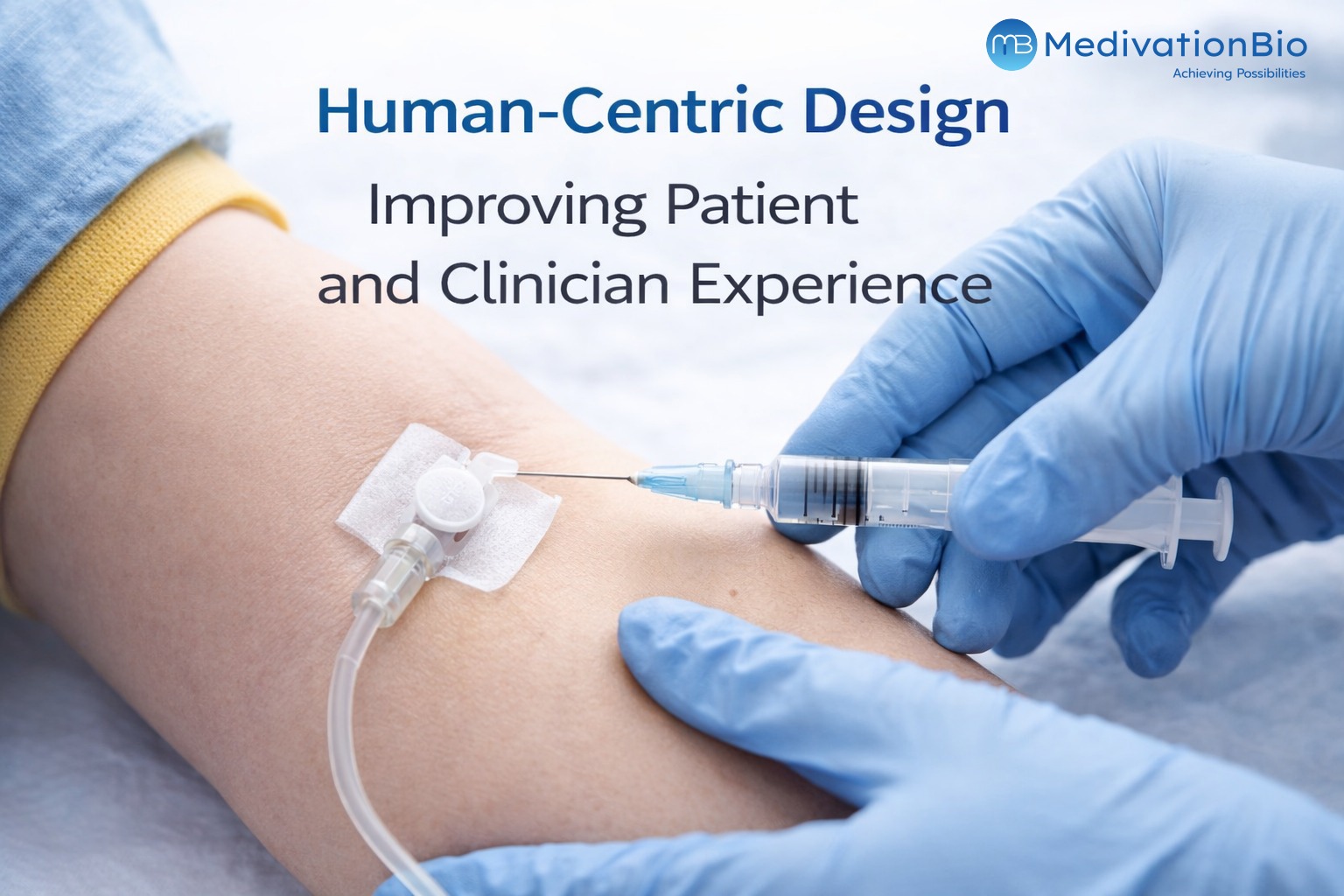
Human-Centered Engineering in Healthcare Consumables
Healthcare is often described as a science, driven by data, protocols, and precision. Yet at its core, it remains profoundly human. Every clinical interaction involves people, patients in vulnerable moments and clinicians working under constant pressure. As healthcare systems evolve, there is growing recognition that technology must serve these human realities. This is where human-centered engineering in healthcare consumables is making a lasting impact.
From IV cannulas and syringes to catheters and diagnostic collection systems, everyday medical devices are being redesigned not just to function but to feel intuitive, safe, and compassionate in use.
What Human-Centered Engineering Really Means
Human-centered engineering places the needs, limitations, and behaviors of users at the center of design. In healthcare consumables, this means understanding how devices interact with:
- Patient anatomy and comfort
- Clinician workflows and hand movements
- High-stress clinical environments
- Repeated, high-volume use
Rather than focusing solely on technical specifications, this approach asks a critical question: How does this device behave in real clinical situations?
The answer often determines whether a procedure is smooth or stressful, successful or repeated.
Designing for Patients: Comfort, Dignity, and Trust
For patients, medical consumables are often their most direct point of contact with healthcare. The design of these tools can significantly influence pain perception, anxiety, and overall experience.
Fine-gauge needles, atraumatic catheter tips, and flexible materials help minimize tissue damage and discomfort. For children and elderly patients whose veins are smaller or more fragile, these design choices are especially important. Studies show that repeated failed IV insertions increase patient distress and delay treatment, reinforcing the need for devices engineered with empathy. Biocompatible materials also play a role in reducing irritation, allergic reactions, and inflammation during longer dwell times. These improvements support not only physical comfort but also patient trust in care delivery.
Designing for Clinicians: Confidence in Every Procedure
Healthcare professionals perform thousands of procedures over their careers, often in fast-paced or emotionally demanding settings. Human-centered engineering recognizes that clinician experience directly impacts patient safety. Ergonomic grips, smooth plunger action, and balanced device weight reduce hand fatigue during repeated use. Clear visual indicators, color-coded gauges, and intuitive handling minimize cognitive load, allowing clinicians to focus on the patient rather than the tool. Safety-engineered features further protect healthcare workers from accidental needle-stick injuries: an ongoing occupational risk worldwide. These design elements are not add-ons; they are integral to safer, more efficient workflows.
MedivationBio approaches consumable development by closely aligning device design with clinical realities, ensuring products support both performance and usability across care settings.
Engineering for Real-World Clinical Environments
Human-centered design also considers the environments in which consumables are used. Emergency rooms, ICUs, operating theaters, and outpatient clinics each present unique challenges. In high-pressure situations, devices must perform reliably with minimal adjustment. IV cannulas, for instance, need ultrasharp needles for quick, controlled insertion and kink-resistant catheters that maintain flow even when patients move.
Secure hubs and connectors help prevent leaks and dislodgement, reducing interruptions during therapy. These design choices may seem subtle, but they significantly improve consistency and predictability in care delivery.
Human Factors and Patient Safety
Patient safety is closely linked to human factors. Errors often occur not because of lack of skill, but because devices are difficult to handle or prone to misuse.
Human-centered engineering reduces these risks by:
- Simplifying device operation
- Making correct usage intuitive
- Reducing steps and force required
- Supporting standardized handling
In diagnostics, for example, well-designed blood collection systems with clear labeling and secure sealing help preserve sample integrity and reduce pre-analytical errors, improving diagnostic accuracy and patient outcomes.
Quality and Manufacturing as Enablers of Human-Centered Design
Design intent must be matched by manufacturing excellence. Consistent quality, sterilization integrity, and material reliability ensure that human-centered features perform as intended at scale. Robust quality systems validate every batch, ensuring that what clinicians experience in practice matches what engineers envisioned during development. This consistency builds trust, both in the device and in the care process.
A More Humane Future for Healthcare Delivery
As healthcare continues to evolve, the role of consumables will expand beyond basic functionality. Devices that are intuitive, safe, and comfortable are no longer optional; they are essential to modern care. Human-centered engineering reminds us that small devices can have a profound human impact. By aligning technology with real patient and clinician needs, healthcare consumables are becoming quiet partners in safer, more compassionate care delivery.
In the end, the future of healthcare will be shaped not just by what we treat, but by how thoughtfully we design the tools that make treatment possible.
